





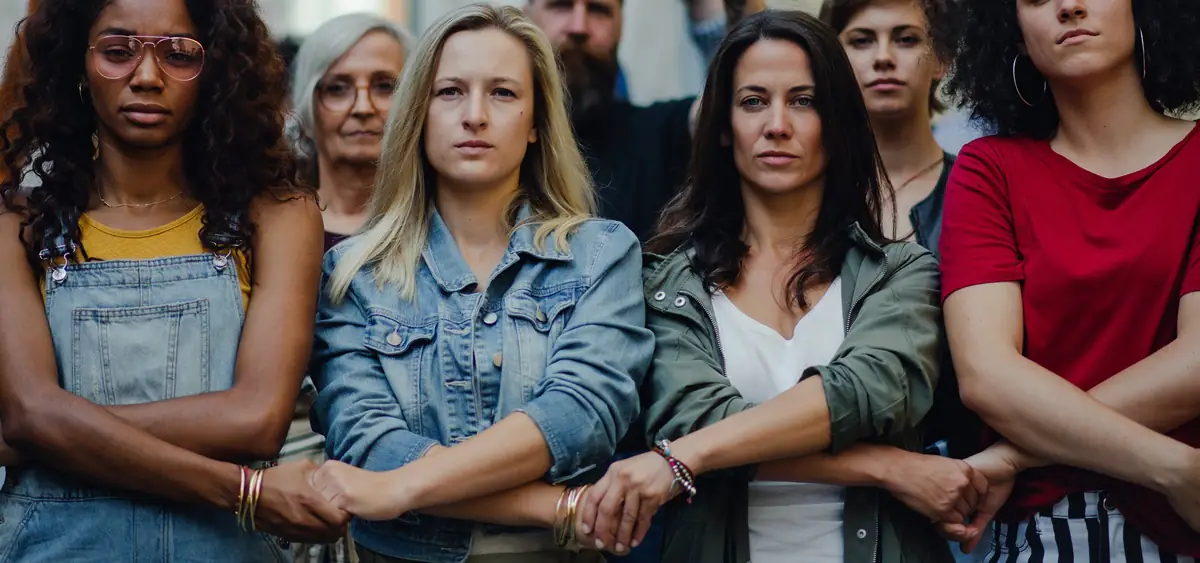
To celebrate International Women’s Day, here is a look at milestone moments that shaped women’s lives in Canada since the 20th century.
1918
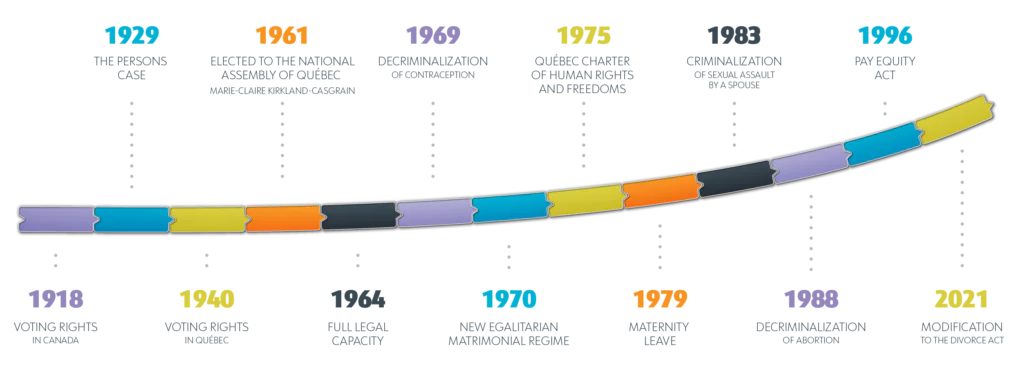
Women over the age of 21 are given the right to vote in federal elections, except for certain ethnic groups excluded by law. For example, Asian and Indigenous women are still not allowed to vote.
1929
The Persons Case recognizes women as ‘‘persons’’ under the British North America Act of 1867. Among other rights, this decision allows women to become senators.
1940
Quebec gives women the right to vote in provincial elections, becoming the last Canadian province to do so. However, Indigenous women – and men – had to wait until 1969 for that right.
1961
Marie-Claire Kirkland-Casgrain is elected and becomes the first female deputy at the National Assembly.
1964
Quebec wives no longer have a duty to obey their husbands and now have full legal capacity.
1969
The Canadian government decriminalizes contraception.
1970
Community of property is no longer the main matrimonial regime for married couples. This regime gave more advantages to the husband in the management of property shared by the family. New married couples are now ruled by the matrimonial regime of partnership of acquests, a fairer regime.
1975
The Quebec government introduces the Charter of Human Rights and Freedoms which, among other things, bans discrimination based on sex.
1979
Quebec women are allowed up to 18 weeks of maternity leave without risking to loose their jobs.
1983
Sexual assault committed by a spouse is now recognized as a crime.
1988
In R v. Morgentaler, the Supreme Court of Canada decides that abortion is no longer a crime in Canada.
1996
The Pay Equity Act is introduced. This law’s goal is to correct wage gaps between men and women, for work of equal value in the same company.
2021
The Divorce Act is modified to include the notion of family violence. Judges now must consider family violence during the divorce process and when making decisions about child custody. Family violence is a broad concept, and it includes sexual, physical, psychological, and financial abuse.
|
Corrections A previous version of this article did not specify that when women gained the right to vote in Quebec in 1940, it excluded Indigenous women. |