






Sport hunting is a popular activity in Quebec. But don’t be too quick to set out for the forest. Since hunting involves the use of weapons, make sure you follow all the rules.
Get the right hunting certificate
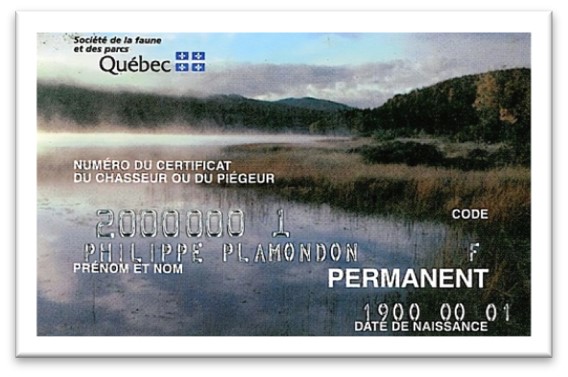
Most hunting activities require a hunting certificate. To get a hunting certificate, you must live in Quebec and be at least 12 years old. You must also successfully complete the training or trainings required for the kind of hunting you want to do: hunting with a firearm, bow or crossbow hunting, or trapping.
A hunting certificate is only valid for one kind of hunting, identified by a capital letter: “F” is for hunting with a firearm, “A” is for crossbow and bow hunting, and “P” is for trapping.
A hunting certificate is valid for life. Once you have one, you don’t need to renew it unless you stop living in Quebec or a court cancels it (for example, if you are convicted for poaching).
To hunt with a firearm: license and registration
To hunt with a firearm, you must have a possession license in addition to your hunting certificate, or you must borrow a firearm from someone who has a valid possession license and is there to directly supervise you. In Quebec, a license to carry is called a possession license.
To get a possession license, you must be at least 18 years old and have passed the Canadian Firearms Safety Course. People aged twelve to seventeen can get a juvenile permit to borrow and use firearms.
The owner must register the firearm with the Québec Firearms Registration Service.
|
Not all firearms are allowed |
To go hunting
You must purchase a hunting license for each hunting season and each species you hunt (e.g. moose, elk, small game). Open season dates vary by zone, hunted species and the weapon you are hunting with. In some cases, you must get your license before the hunting season opens.
If the zone where you want to hunt includes private land, you must also get the landowner’s permission.
Hunt responsibly
You must follow the rules that come with your hunting license. If you don’t, you could be fined and have your license suspended or canceled. For example, if your license is only valid for hunting elk with antlers at least 7 cm long, you cannot shoot a young white-tailed deer because you mistakenly believed you were allowed to hunt “any type of deer.”
You must also follow certain safety rules.
Usually, you must wear a fluorescent orange safety-vest in hunting zones. In addition, it’s generally illegal to hunt at night or to fire on an animal from a public road or a vehicle.
Also, you cannot fire toward or across a road that is open to vehicle traffic.
Firearms and ammunition transportation is regulated as well. For example, if a hunter leaves a loaded firearm between the seats of their truck with ammunition close at hand while making a stop in town, they may be transporting and storing the firearm unsafely. This could lead to their firearm being taken away and their license being canceled.
Finally, if you’re careless, you could face a civil lawsuit or even criminal charges.
|
Did you know? The SUPPORT helpline is a free and confidential service for anyone concerned about gun violence affecting someone close to them. It offers phone support as well as peer support groups, available online or in person. |