


For over a month, France has been swept by a mixture of peaceful protests and violent riots. In Quebec, everyone has a right to express themselves by protesting peacefully. Violence of any kind is not allowed. That being said, courts have sometimes needed to step in to clarify some of the more specific rules around protesting.
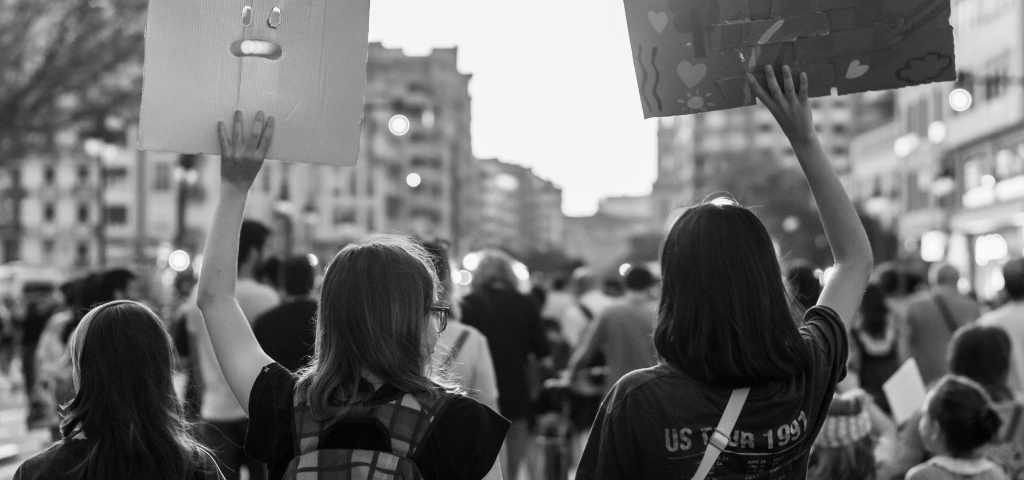
Protesting is a way for people to express their views publicly, usually to bring attention to a cause they support or to show disagreement with something. The Canadian Charter of Rights and Freedoms and the Charter of Human Rights and Freedoms (Quebec Charter) protect two fundamental freedoms: the freedom of opinion and expression and the freedom of peaceful assembly. Together, freedom of expression and freedom of peaceful assembly create a right to protest peacefully.
You must protest peacefully
While the right to protest is broadly protected by the law, it’s not absolute. As stated, the Canadian and Quebec Charters protect the right to protest peacefully. The Quebec Court of Appeal has stated that violence undermines key aspects of freedom of expression, like sharing ideas, personal growth, and seeking truth.
This means that you can’t engage in any acts of violence, threaten violence or encourage others to engage in it. You also can’t have anything with you while protesting that could be used to damage property or injure someone.
If the police have a reason to believe you have a weapon or another dangerous item like a firework, they could search you. If you have one with you, the police could take it away from you and fine you. If you commit a crime during a protest, like damaging property, looting a store, or injuring someone, you could be arrested and charged.
It’s also a crime to display hate symbols, like certain well-known Nazi symbols, or encourage violence against an identifiable group. An identifiable group is a group of people who can be recognized based on their skin colour, race, religion, national or ethnic origin, age, sex, sexual orientation or gender identity, or mental or physical disability.
You have the right to protest in most public spaces
You’re allowed to protest in most public places. For example, you can protest in the street, on the sidewalk or in a park. These are traditional and historical places for protesting.
However, you can’t target certain types of private property, even if you’re on a public street. For example, you could be fined if you protest within 50 metres of an elected representative’s home.
Also, it’s a crime to try to intimidate or block people who are trying to enter a place of worship, a cemetery, or a building that’s mainly used by an identifiable group. Again, an identifiable group is a group of people who can be recognized based on their skin colour, race, religion, national or ethnic origin, age, sex, sexual orientation or gender identity, or mental or physical disability.
You can contest the rules in court
If you think a rule goes against your right to protest, you can ask a court to decide. Some important court decisions have addressed rules created by municipalities for protests happening in their area.
Municipal rules are called by-laws. These rules often come with a fine for breaking them. Here are some municipal rules around protesting that have gone to court.
During the 2012 Quebec student strike, a Montreal by-law banned protesters from wearing a mask. In 2016, the Superior Court cancelled this rule. The court explained that protesters have the right to protect their identity if they’re protesting peacefully.
Different municipalities have also required protesters to tell the police the time, place, and route of an upcoming protest. In 2018 and 2019, the Quebec Court of Appeal cancelled this rule for Montreal and Quebec City. The court explained that protests are inherently disruptive and that using public roads for peaceful protests is a legitimate activity.
The court considers each law or by-law individually. They can only cancel a specific rule that’s been challenged by someone.
When a court cancels a rule, the government who made it has two choices. They can leave it or make a new rule that they think respects the court’s guidelines.
For these reasons, certain municipalities may have rules that seem to contradict these court decisions. If you think a rule in your area goes against your right to protest, you can bring it up with the municipality or ask a court to decide.